Day 45: 410 km Schultzes Landing 29th Nov 2016
Canoe trail - Wetland tour - Weir operations - Flood pulse - Overland Hotel - Hot days Cool beer - Wigley Straight

Moorook to Schultzes Landing.
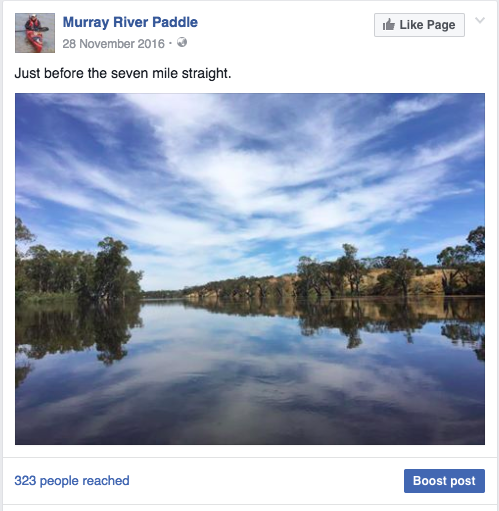
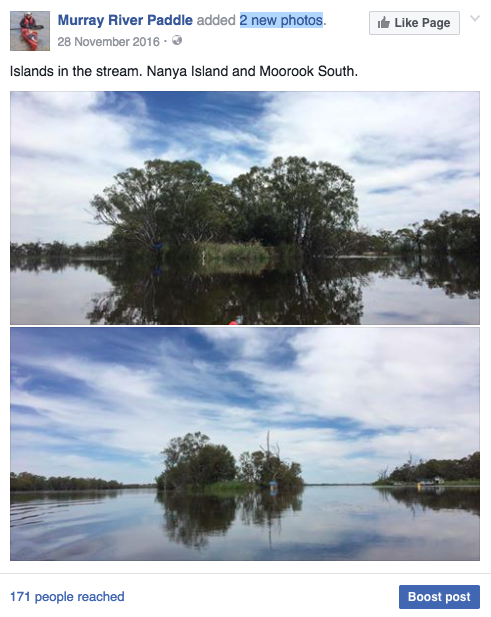
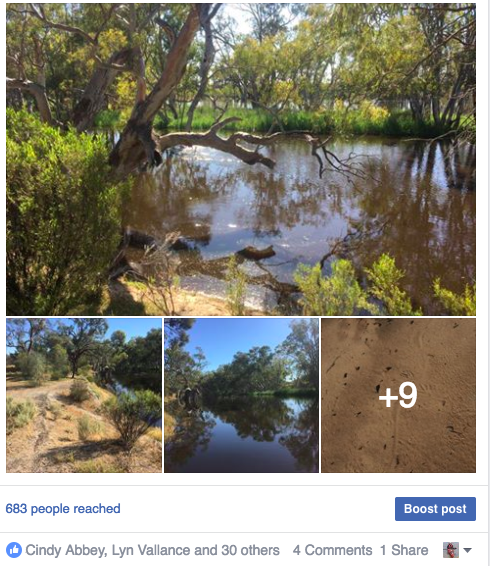
I left Moorook South early to enjoy the light and to have plenty of time to take a few detours. Like Katarapko Creek, near Loxton, this area has been developed with canoe trekkers in mind. There are allocated campsites, each with their own fireplace all along the river, and marked trails through wildlife reserves and between lakes. With the river restricted to the space carved by the ancient Murray through the landscape, billabongs and anabranches are never far away. Under the influence of the lock 3 weir pool, these are flooded. Flood runners become streams resulting in a maze of pathways through the bush. I turned into one of these near Thurk Island (just before Kingston on Murray) to explore Loch Luna Game Reserve and was immediately surprised by the speed of the current. Once I got used to hugging corners and dodging snags again, I enjoyed paddling amongst the reeds and water plants. Normally a shy bird, reed warblers were everywhere. After climbing a hill to understand the landscape, I paddled back to the Murray and continued on to Kingston.Whilst it was fun to paddle in the small stream, I prefer the main channel. It too is edged by reeds and there are plenty of opportunities to explore its fringing wetlands.
Making good time now, I noticed a pontoon boat drifting in the direction of the weir. I picked up the pace thinking I could at least tie up the boat to a tree so that it did not come to grief. On coming closer I saw that it had people on board. It was a tour from Kingston which specializes in the wetlands. When I saw them they had been drifting, listening to birds. We had a chat about what I was doing before they disappeared into Loch Luna to continue their tour.
When I arrived at the weir, the personnel were removing the walkways from the top of the weir wall using an excavator on rails. As there was not yet enough water going over the weir pass for larger vessels, the yellow barrier floats blocked boats from entering. I tried calling the lock master, but each time got a fax. Later I found out I had been calling a number in Melbourne. I had forgotten to use the South Australian area code '08'. I tied up my boat, found the lock master and entered the lock once the gates were open wide enough. Lock Master Simon wore a big hat with a cattle tag on the bream and had worked for National Parks in Alice Springs before moving to Lock 3. He told me that he had been to a conference where they learnt about the carp virus. Apparently CSIRO is still number crushing before they bring it into the country. I thought it was ready to go. Simon had spent a lot of his free time removing willows near the lock. He had reservations about using them to prevent bank collapse. "People are people, they will let them grow, rather than managing them and they'll go wild again" he said. Simon gave me his card to keep in touch. He knows a lot of people who would be useful to talk to next time I come through. The wetlands manager at Banrock Station will want to talk to you, and my wife is involved in landcare: she knows a lot of people too.
Simon pointed out a large dead cod. It was the first he had seen. "We've seen lots of bony bream, but up until now, no cod." I said that I thought it had come from somewhere local, because I hadn't seen any for the last 5 days. After starting two weeks behind the flood pulse, I am now two weeks ahead, so it is unlikely that this fish came from those killed in the Mildura region, or further upstream. Other than the odd bony bream, I saw no other dead fish today and no sign of shrimp gathering by the edge of the river, so my guess was that it was one of the wetlands that feeds into the Murray.
Leaving Lock 3 behind, I set off for The Overland Corner Hotel. This was something I've been looking forward to for days. My memory of the place from 2012 was of a hotel in the middle of a dusty plain, accessible only by a small track through the Lignum scrub. That year had been particularly hot. For weeks the temperature remained above 40°C. The bush looked parched and had not yet begun to recover from the millennium drought. On the water, I constantly had to pour water over myself to keep from overheating. Nearing the end of the day’s paddle, tired and thirsty, I saw the most unlikely of signs. Standing on an angle in the gray mud amongst the lignum, it said hotel 700 m. How could I refuse? I set up camp in the shade of a small bush, changed into some decent clothes and trekked through the dust not really believing that there would be anything at the end of the track. You can imagine my surprise when I saw the most comfortable and quaint looking of buildings. It's 2 foot thick walls kept the inside cool and that was where I was headed. I ordered a pint and a burger and still think of this as one of my best experiences on the river.
The Overland Corner Hotel gets its name because it marks the spot where, in the days of steam and before the Murray's system of weird was developed, that paddle steamers could reliably take the passengers in times of drought. From this point on they had to take the coach. This was something of a come down. The passenger paddle steamers of the day had cooks, dining rooms and entertainment. They didn't bump around, you had your own room and you could watch the banks pass at a leisurely pace with a breeze coming off the river to keep you cool and you could take as much luggage as you wanted. In the evenings the captain would join you at the long dinner table on the top deck spinning river yarns and tales of characters he'd met. Stagecoaches were no comparison. For those people the Overland Hotel was the last point of comfort.
This visit is quite different. I do not have the high temperatures. For most of my trip the temperature has been 20s and 30s and I've only had a few days with strong headwinds and bad weather. I have, however, had floods. The Highwater enabled me to canoe past the leaning hotel sign, follow the space between the lignum bushes where the track must've been and paddle right up to the levee that surrounds the Overland Hotel. Apparently I was the first person to arrive by boat this year. I don't think I'll be the last.
After chatting with the owners and enjoying a cool beer, I moved outside to the shady garden surrounding the hotel to enjoy the massive burger they had served me. I also used the opportunity of having mobile reception to catch up with family and conduct an interview with Matt from ABC Mildura (scheduled to air at 7:10 tomorrow I think).
Rather full, I made my way down the aptly named 'Wigley Straight (Reach)'. For the next 10 km were the most impressive cliffs. The tallest being Telegraph Cliffs. It was at this point that I heard the low growling sounds of a large engine. I'm used to the sounds of pump engines whether they be diesel or electric but this was different. In the distance I could see the Murray Princess approaching. She is the biggest paddle boat on the Murray River, taking sometimes week long cruises on the lower sections of the river. I gave her plenty of room, which was a good thing, as the wash her enormous stern wheel kicked up was a little short of amazing. It could easily sink a boat and had more in common with ocean ways than what we normally see on the river.
With 10 hours on the river today I was glad to finally find camp. Only a short run into Waikeri tomorrow, where I will restock my food and enjoy a walk around town.